Thursday, May 9, 2013

#booksandprint


In one of my education classes, we talked about using Twitter as an educational tool. At first, I thought he was kidding. I have a Twitter but to say I use it would be a joke. I didn’t know of its uses beyond posing quick questions, quotes, and anecdotes. But in reality, Twitter and the hashtag system can be used to search for educational theories, lesson ideas, and much more.

This got me thinking. With the rise of electronic books, is there a way to combine the hashtags with ebooks? If they already do then maybe it’s me that needs to get with the times. But I wonder if it’s possible to connect these two technologies. Say I’m reading a book about dinosaurs on an e-reader (why not right?). I come across a topic in the book that interests me, and at the end of the section is a hashtag, #brontosaurus. I click or select it and immediately I have access to articles on the subject, as well as links to other books, and I would see that brontosaurus was never its real name, but apatosaurus. Who knew?

Anyways back to the point. The more I write about it, the more it sounds like a Google search. But I know how effective hashtags are on social media. One click and I can see everyone who has ever posted #coffee, which is what I am currently drinking by the masses. Maybe this would be overkill, just another thing for us to add. But I figure, since most of our generation already knows how to use hashtags, why not give it a try.

Wednesday, May 8, 2013

The Great (or not so great) Gatsby


Well, the reviews are out. Rotten Tomatoes assigns this much anticipated film a 38%. Cue the sad violins. Granted, these are movie critics, who virtually hate every movie unless it wins Best Picture. I’ll admit, reading the broken record of comments was depressing. When I first raw the trailer in theaters, my heart was beating out of my chest with excitement. “Style trumps substance”, “all about the glitter but has no soul” and my personal favorite, “just as boring as sitting through 8th period English”. Now I don’t know about you, but I loved reading this book in high school.

If this movie does indeed focus heavily on visual elements, is this necessarily a bad thing? One critic complains that this movie is “tethered to Fitzgerald's words while failing to approach “Gatsby's romantic, heartbreaking soul” (Caryn James from James on screenS). While I haven’t seen the movie, and could very well form a completely different opinion after watching, I think that modernizing the movie to reach a different audience is great. From a teaching perspective, I would never be able to show this version in a classroom because of the rating (who knows, with how much children are exposed to in the media this may change in five years). But I think it would make for a great discussion on how to look at a text through multiple perspectives, or critical literacy.

Like I talked about in my previous post, sometimes visual elements are necessary to get students reading. The student I worked with at Centennial, who loves graphic art, would see this movie and analyze it through a graphic art perspective. Therefore, if I asked him to read the novel, he could use visualization to understand the plot, improve his reading comprehension, and connect with the text.

So while rotten tomatoes sees this film as a visual nightmare, I think it could be a great way to connect classic literature with modern visual appeal.

Just Read.

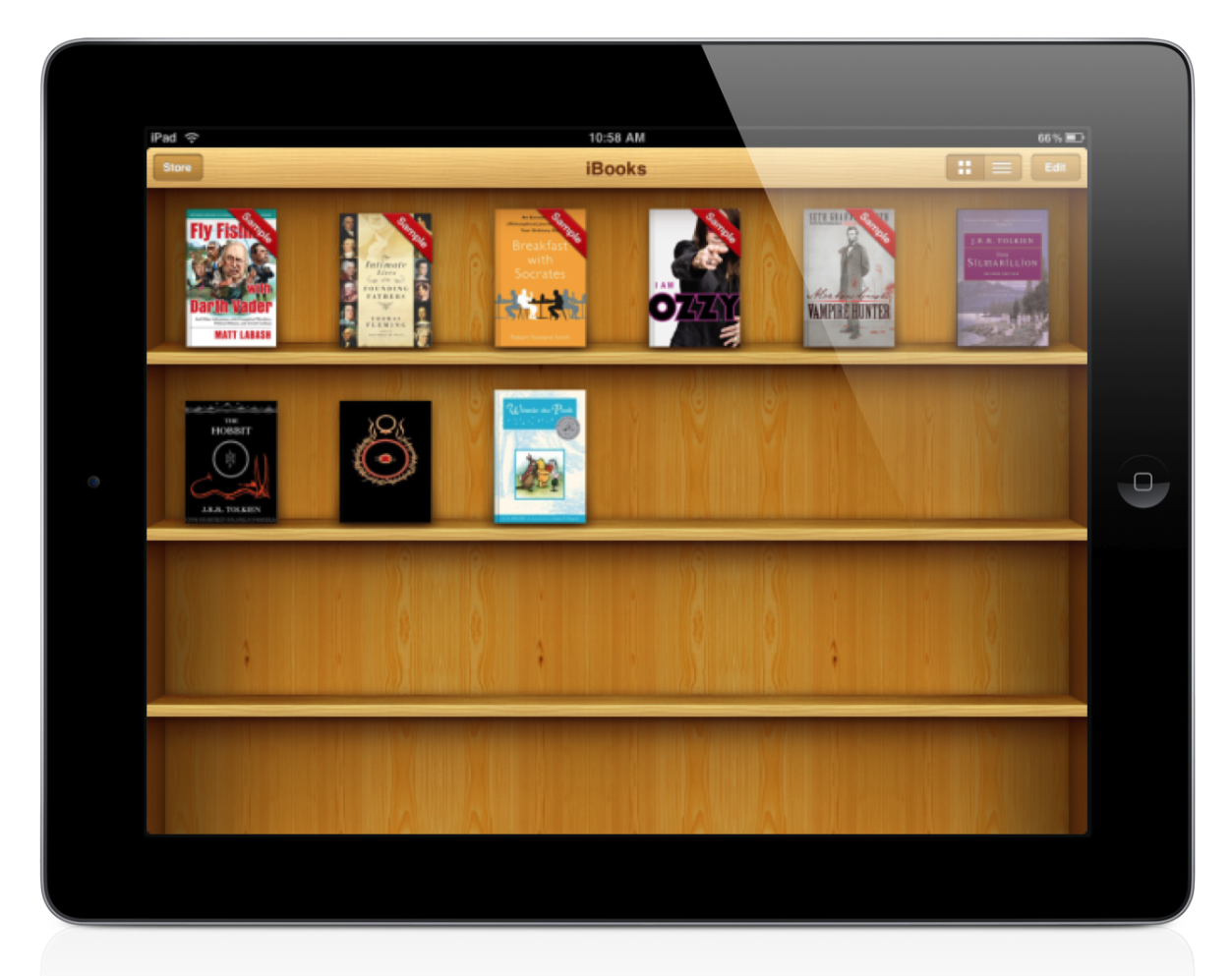
In a typical high school English classroom, about one-third of the students are genuinely excited about reading. As for the rest, the only the only power keeping them in their seats is the government. Okay, so maybe I am exaggerating, but this semester when I worked at Centennial High School in Burleson, the phrases "I hate reading" or more commonly, "I suck at reading" flowed freely throughout the classroom. This is discouraging to hear, but I believe there is something we can do. While working one-on-one with a student, I started conversing about his reading habits. Once again, the dreaded phrase "I hate reading" came up, and when I asked why, he looked stunned. It occurred to me that this belief had never been questioned. He replied with "I just do. I've never been good at it." I learned from later observation that he was diagnosed with dyslexia in elementary school, but he did not let this hold him back. He explained how at home, he loves to read on his iPad. His artistic skills are highly advanced (to the point where in the middle of a lesson he would just start drawing in three dimensions with shading and exquisite detail, just with a ball point pen mind you.) He talked about the graphics that iPad uses for books and how this makes reading exciting for him. Now I am all for print books and generally prefer them to ebooks. But when a freshman student reading at an elementary level states that reading on an iPad is exciting, in my book (no pun intended) that is a win. I need to do whatever I can to excite students about reading. Whether that's an iPad, an eReader, comic book, reading is reading. For the remainder of our lessons, I let him bring his iPad, and we read Romeo and Juliet and found links to video clips, pictures, and translations to modern English. Overall, the fact that I allowed him to use an iPad in class boosted his confidence as a reader and made his experience with the text interactive and visually stimulating.

Charles Backus of Texas A&M Press

For our publisher interview, Makenzie and I contacted Charles Backus from Texas A&M Press. The following are his responses.

1. What are the professional qualities needed for a publishing career?
  • An inquisitive and ordered mind. A sound knowledge of language and broad familiarity with good literature. Organizations and time-management abilities. At least basic computer skills; ideally, familiarity with editorial, design, and production software. Particularly for scholarly publishing, some direct experience or involvement with the process of scholarly research, conventions, and writing.
2. What has been your favorite work that you were involved in publishing? Why?
  • I can't really narrow it down to one but will mention three or four. If you asked me tomorrow or next week, the list might be rather different. A Continuing Education, the first book collection of familiar essays by Sam Pickering (a wonderful scholar, prolific writer, and humorist reputed to be the model for the Robin Williams character in the movie "Dead Poets' Society"). Published by University Press of New England in 1985, this was one of my first acquisitions a year or so after I began work there, and I have been privileged to maintain contact with Pickering ever since
  • The 2000-Yard Stare: Tom Lea's World War II, compiled by Brendan Greeley, published by Texas A&M University Press in 2008.  This book is filled with extraordinary art and eyewitness writings by celebrated Texas artist Tom Lea from his WWII assignments for Life magazine, which took him first to the North Atlantic; then through England, Southern Europe, the Middle East, and India, to China and back; then to some of the greatest naval battles in the South Pacific; and finally to one of the fiercest of the Marine Corps' island invasions toward the end of the war.  
  • Creating Picturesque America: Monument to the Natural and Cultural Landscape, by Sue Rainey, a compelling, illustrated study of how depictions of the American landscape in art and words became central to a renewed focus on the grandeur and riches of the American continent in the years following the Civil War.  The book was published, following numerous revisions, by Vanderbilt University Press in 1994, ten years after I first established a working editorial relationship with the author, who followed me from one press to another. (Note also my response to your question #7.)  It subsequently won the Charles C. Eldridge book prize in the field of American art from the Smithsonian, in 1997.
  • A Writer's Reality, by 2010 Nobel Prize winner Mario Vargas Llosa, published in 1992 and based on his lectures at Syracuse University while I was director of its press.  I got to know and work with him then and was later able to arrange a campus visit and standing-room-only lecture by him at Vanderbilt when I was director of its press, where we also published two critical studies of his work as a novelist. 
3. What genres do you typically publish? Who is your main consumer market? 
  • We publish both scholarly and general interest non-fiction, In both print and digital (ebook) formats.  We also distribute some fiction and poetry for client publishers in our distribution consortium.  We sell to all elements of the book trade, including chain stores, independent book stores, wholesalers, online and ebook vendors, libraries, institutions, book clubs (and other subsidiary rights), college course use, and individuals.
4. What has been the most valuable lesson you have learned in publishing?
  • Without effective publication, the products of research, discovery, and creativity are impeded or lost altogether.  
5. How has your publishing been affected by the movement into a digitally focused society?
  • Although our overall goals and mission as the principal publishing arm of a major research university remains basically unchanged, the technologies, processes, and formats through which we acquire, edit, design, manufacture, promote, advertise, sell, and distribute books have all evolved rapidly in the past decade, as have reader and market expectations. Like our peer university presses around the country, we have invested considerable amounts of prioritized effort, time, and money in keeping on the proactive side of these developments.
6. Where do you see publishing in the future because of this shift into a digital age?
  • Obviously, publishing in digitized, electronic form is here to stay, for university presses and all other publishers, but that does not necessarily mean the end of print on paper.  For at least the next few or several years (perhaps decades?), readers will want both print and digital products, and publishers including university presses will be able to deliver both.  Print-on-demand will be an important part of that mix.  But so will increasingly sophisticated and useful enhancements of digital books (perhaps especially scholarly ones) that include greater and richer data, audio and visual representations, including both 3-D and 360º images, and who knows what else in the future. 
7. How many revisions does a work typically go through? How long does the process last?
  • There is no one answer to this question.  It is very rare that a university press book is published exactly as first submitted by the author, with no more than minimal copy editing.  Most are revised and reorganized, often heavily, based not only on critiques from the press's acquisitions and manuscript editors but also from formal evaluations and content suggestions from peer reviewers. The evaluation process typically takes from three to six months to accomplish.  Once approved for publication, further revisions and editing usually requires at least two or three months but can take much longer. 
Thank you Charles Backus for the insight into the publishing business. I found it interesting that they publish ebooks as well as print books. Typically when I think of a press, I think of printed books, not electronic. That being said, I think this is a great way to stay current and offer options to reach a wider audience. Also, I loved hearing about his connection to Sam Pickering who inspired the Dead Poet's Society. This is one of my favorite movies. What an incredible experience so early in his career. Overall, this interview provided great information as to what skills and commitments are necessary for a career in publishing.

Thursday, March 7, 2013

Birds of a Feather

After conducting the reader interviews, I realized one very important cliche: birds of a feather flock together. Individuals that I chose to interview that are my close friends share similar reading styles and habits. We all stay up late reading our favorite novels, trade books once we finish, and anxiously await the release of film adaptations. I often find myself engaging in heated debates, and attempting to play match-maker with my favorite characters. Needless to say, I am blessed to have crossed paths with people that share this common interest.

In this process, however, I was caught off guard by my own technology habits. I spend more time on Facebook and texting than I do studying. The first thing I do in the morning after hitting snooze five times is grab my phone, open Facebook, open Twitter, open my email, and maybe if I am feeling adventurous, surf Pinterest for a couple minutes. I'd say my thumbs need a break.

Ahh, the deceptively hard task of naming ten literary authors. Is it bad that I chuckled to myself when someone would mutter "Oh, that's easy. Of course I can," and then struggled to name five? Yes? Well, I did it anyways. This got me thinking about how much we read as college students, yet we can't remember authors. We are trained to order books, read them, take a test/write a paper, and forget. We are immersed in this constant educational cycle where our knowledge goes in one ear and out the other. Don't get me wrong, I am the first to admit that I have read books three times and still could not tell you the author. I have aced tests that I guarantee I would fail if I took them today. How do we get out of this cycle? Is that just college life? Or is it because we now live in a society of instant gratification and for many, reading just takes too much time? Why read the book when you can watch the movie, right? I venture to say, wrong.

Tuesday, March 5, 2013

Broken Pencils Are Pointless


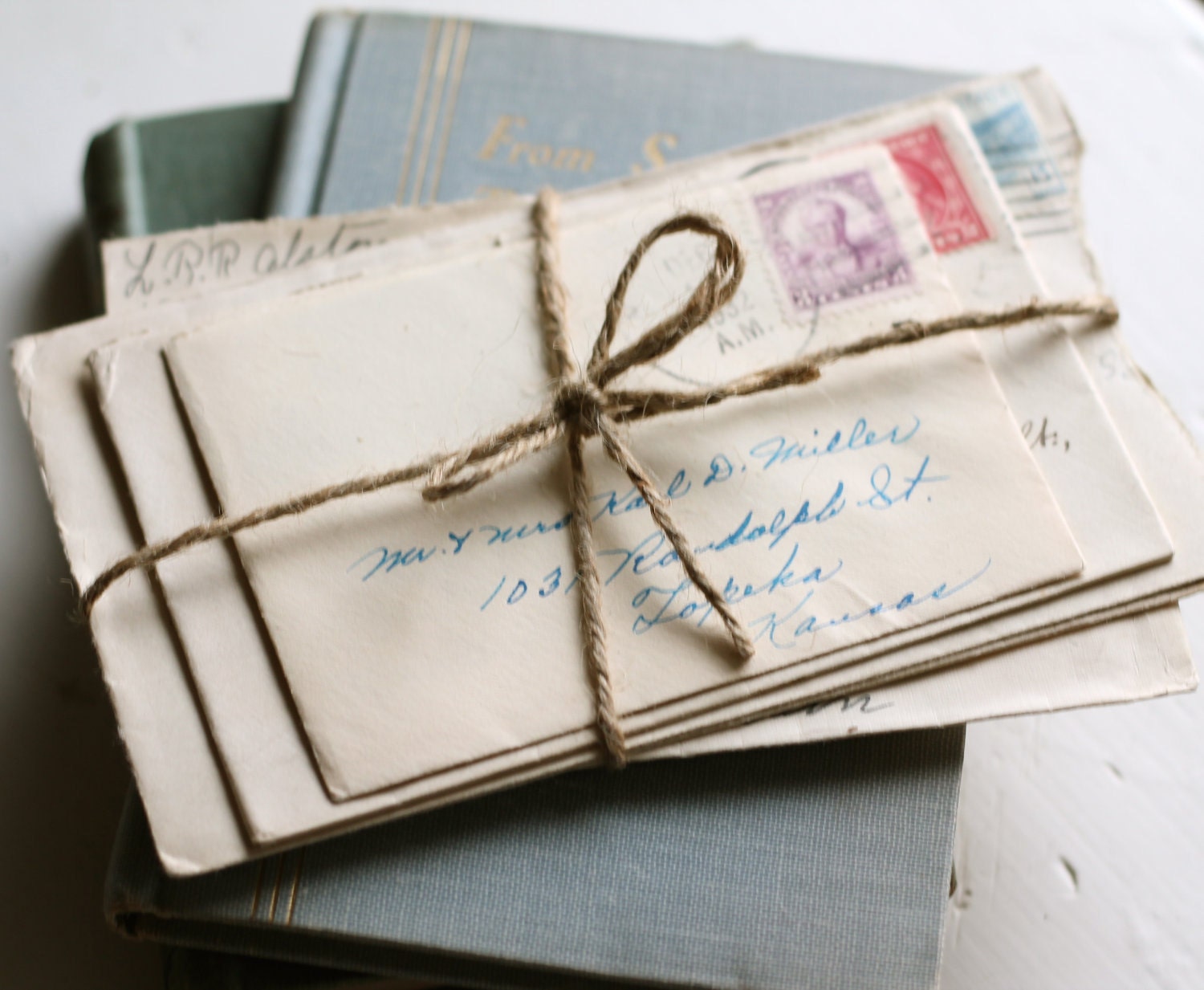
Oh, the joy of handwritten letters. To rip open an envelope to find beautiful penmanship etched onto the page. To hear the sender's voice like they were sitting in the chair next to you. Maybe I am a hopeless romantic, but I envision a life where I receive a bundle of notes wrapped in twine hand delievered by the postman. Perhaps this dream could be attained if I lived in a different time, or even a Nicolas Sparks novel.

Recently, I have been thinking about this "lost art." Everybody says that handwritten notes have faded away with the texting and email technologies, and that is true. Younger generations center their lives around speedy communication and instant gratification. The idea of waiting five days for an old fashioned stamped letter seems agonizing. We sacrifice the well-being of our thumbs to send an average of 88 text messages per day, according to CNN.

But what does this mean for education? For years, students across the globe have been taught the importance of clear, cursive penmanship. Teachers assess the readability of letters and the clarity of handwriting. And yet, when students step outside the walls of their school, they immediately run to their computers and phones to catch up on Facebook, Twitter, and Pinterest. They log on to their videogames and email accounts. They trade in their pencils and paper for their keyboards and touch screens.

This trade leaves me wondering how to incorporate this exponentially changing technology into my classroom. How do I still encourage literacy in a society that prefers "c u l8ter"? This means that as much I cling to the nostalgia tied to bound books and handwritten letters, I must embrace this change head-on for my students sake. Technology is doing wonders for the educational system, specifically in literacy. Students can create multimodal projects that demonstrate a wide range of knowledge. They are connecting to students in other states and even countries through Skype and iChat. They literally have the world at their fingertips, begging them to dive into a wealth of knowledge that cannot be conveyed through a textbook.

Even though the world has shifted into the digital age, there will always been a need for pencils, just like there will always been a need for books.

Author Interview: Dr. Jan Lacina

To discover more information about the authorship process, we decided to interview Dr. Jan Lacina in the TCU Education Department. 

1. Who or what inspires you as an author?
I think I'm inspired most when I'm in a public school classroom and I see an exemplary teacher and kids who are challenged and motivated to learn.


2. Who or what motivate you as an author?
I like the challenge of writing, and I like the creative outlet. It is something I enjoy on a personal level so I write first because I enjoy writing. And secondly, I publish because it is part of my job and I like to see the final product.

3. What author(s) or book(s) influenced you as an authors the most?
Well, I am influenced on a couple of different levels. I enjoy adolescent literature. I ejoy Sandra Cisneros. She is one of my favorite authors as far as adolescent literature. Most of the books I read are professional books in my field that I read to become a better teacher, a better learner, and a better researcher. I study the way in which they write so I can develop and model better practices myself. I like Donald Graves, he had passed away but he is a well-known figure in the field of teaching writing. I like Hillocks, who I have mentioned in our class, he is retired from the University of Chicago.  
    
4. Most often, where, when, and how do you write?
I need a quite place, not too messy, with a cup of coffee.

5. How is technology changing print culture, specifically regarding authors and readers?
Well it changes it in regards to who reads and who is able to access what I write. Recently I had a professor from Poland contat me because he wanted to access an article I had written but he couldn't access it. He was requesting a copy. I have received more inquiries at the international level regarding my work but also, from reported. I have written a piece and they find it online. 

6. When you write, who is your intended audience?
Generally, those in my field, teachers, and administrators. 

7. How is the current technological revolution changing your audience?
It is more international and people have greater access as far as who is reading the material. Even with Skype, I was invited last fall to speak at Columbia, and I wouldn't have been able to do it if it weren't for Skype. What would have been done through mail in the past is no electronic. 

8. How did you find a publisher, and how long did that process take?
When I began publishing books, the first two I wrote were with professional organizations, and I wrote a proposal and a few sample chapters and it went under review by a publishing committee. And the third book was with an international publishing academic called Sage and I wrote just a proposal and outline and sent it to Sage and another major publisher. Sage picked it up. I signed a contract and their editor guided me through the process. She would send it out to reviews and they would give feedback and I would revise and that took about two years.  

9. How much did your manuscript change during your publisher's editorial process?
The writing and the quality of the book was must stronger with Sage. The editor had a PhD in English, so she helped me through the writing process. I was not as happy with the other two books. I was more experienced, but I was also with a company who had a better reputation. 

10. Do you have a definite and specific organization and structure in mind as you begin writing? If so, how definite and specific is your outline?
Sometimes it take me a while to develop the structure, but once I get my outline, I stay on task. I usually begin with my idea, and think of what the market is or need for the book, and then create an outline and then work on chapters. 

11. How would you describe your writing process?
I start with my idea, and then form that into an outline and then work on the chapters. 

12. Do you have any writing habits or rituals that help your writing process?
I start with my idea, and then form that into an outline and then work on the chapters.

13. Do you write in multiple genres?

I tend to stick with out because that is the one for my job. I tend to write books or research studies. 

14. What was your first publication, and what do you think of this publication now?
That first publication was a column that stemmed out of my dissertation work that was about 15 years ago. I was 28 at the time when I finished the doctorate and I have changed quite a bit. I am not as naive about publishing or writing. 


15. Besides teaching and authorhsip, have you had any other jobs in the writing field?

I am a contend consultant for a book series. I was a consultant for a six book series for children. It was on different genres of writing, and they are books to teach kids the genres. And I am now a consultant for a five book series with the same subject. 

I really enjoyed interviewing Dr. Lacina. As a future educator, I was encouraged hearing her passion for adolescent literature, especially her love for Sandra Cisneros who is an author I enjoy as well. In order to engage students in class with stimulating discussion, she reads the books on her students' level. That way, she is fully immersed in the topics and issues middle and high schoolers face. Also, because she is a research writer, she must be an expert in the types of books these students are capable of and enjoy reading. Dr. Lacina uses the works she reads as inspiration and as a model for her own writing. Overall, her interview helped me understand the reading and writing that goes into being a teacher, and how to better myself as an instructor.

Tuesday, January 22, 2013

Books Before Nooks

One part of the discussion last Thursday that struck me was the concept that future generations will stray from our traditional idea of “reading.” Reading books and escaping into the written word, for me, is one of my favorite places. This C.S. Lewis quote sums up my feelings about reading, “You can never get a cup of tea large enough or a book long enough to suit me.” Give me a cup of hot tea, a good book and a blanket and I will be lost of hours. So naturally, I was sad to realize during our discussion that in 100+ years, children won’t be reading paper books, but electronic versions, like iPads, nooks, and kindles. Now, don’t get me wrong, I think those devices have their place. They are more economical and they save trees, but to me, there is something magical about pulling a book off the shelf and opening to the first page. I love the feeling of breaking open the binding. I love that my favorite books look like they have been run over by a train, with folded pages, creased binding, and tear stains on the best parts. I want my children to experience the joy I felt when I first read Harry Potter, staying up late with a flashlight underneath my covers. I know this is just a personal preference. If my children will only read off an electronic copy, then by all means, they can do that and I will have no objection. I would rather my children, or my future students, read on a tablet than not read at all. At the end of the day, reading is reading. However, for me, I will always be drawn to that old book with the crinkled binding and creased pages.