Thursday, March 7, 2013

Birds of a Feather

After conducting the reader interviews, I realized one very important cliche: birds of a feather flock together. Individuals that I chose to interview that are my close friends share similar reading styles and habits. We all stay up late reading our favorite novels, trade books once we finish, and anxiously await the release of film adaptations. I often find myself engaging in heated debates, and attempting to play match-maker with my favorite characters. Needless to say, I am blessed to have crossed paths with people that share this common interest.

In this process, however, I was caught off guard by my own technology habits. I spend more time on Facebook and texting than I do studying. The first thing I do in the morning after hitting snooze five times is grab my phone, open Facebook, open Twitter, open my email, and maybe if I am feeling adventurous, surf Pinterest for a couple minutes. I'd say my thumbs need a break.

Ahh, the deceptively hard task of naming ten literary authors. Is it bad that I chuckled to myself when someone would mutter "Oh, that's easy. Of course I can," and then struggled to name five? Yes? Well, I did it anyways. This got me thinking about how much we read as college students, yet we can't remember authors. We are trained to order books, read them, take a test/write a paper, and forget. We are immersed in this constant educational cycle where our knowledge goes in one ear and out the other. Don't get me wrong, I am the first to admit that I have read books three times and still could not tell you the author. I have aced tests that I guarantee I would fail if I took them today. How do we get out of this cycle? Is that just college life? Or is it because we now live in a society of instant gratification and for many, reading just takes too much time? Why read the book when you can watch the movie, right? I venture to say, wrong.

Tuesday, March 5, 2013

Broken Pencils Are Pointless


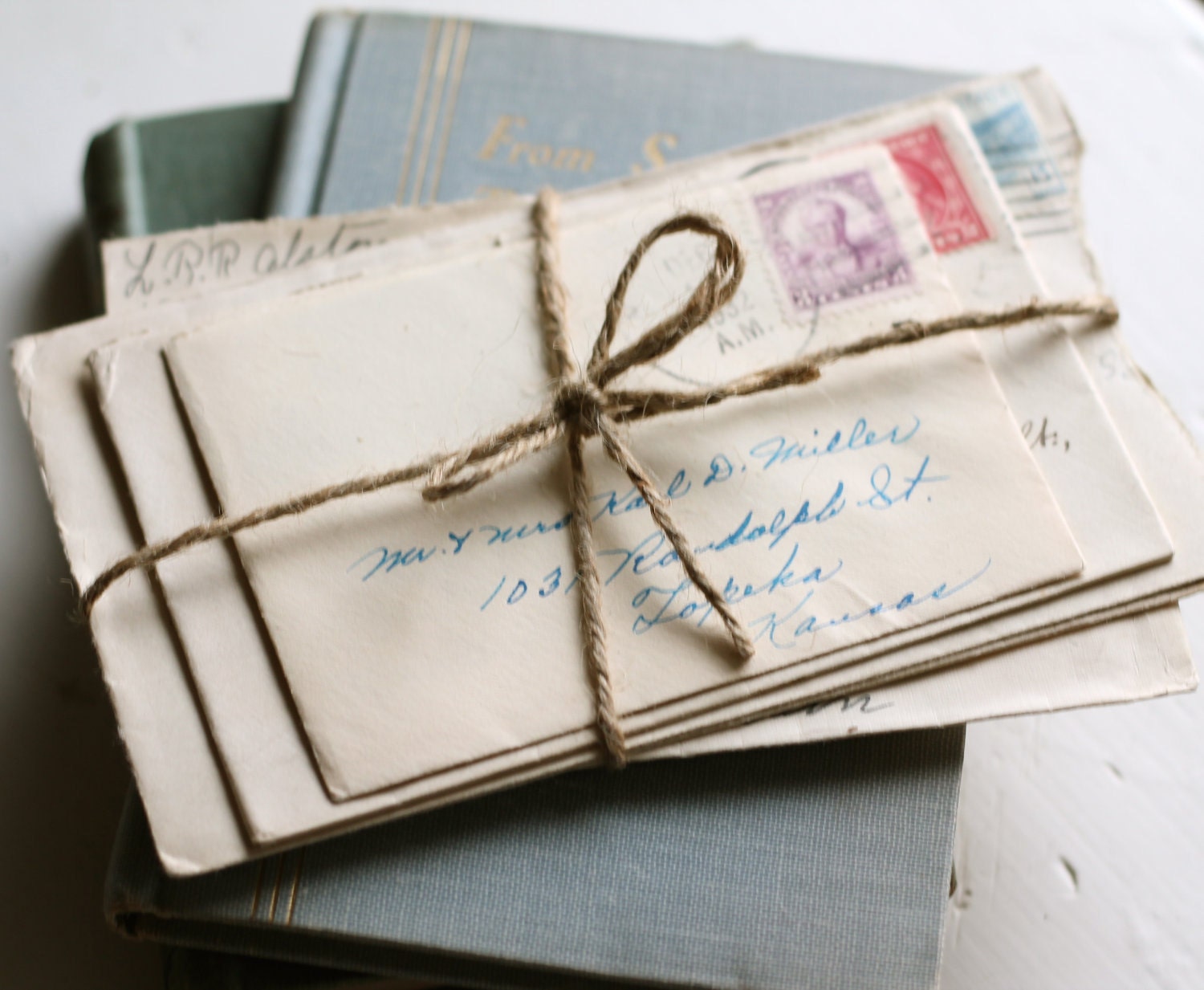
Oh, the joy of handwritten letters. To rip open an envelope to find beautiful penmanship etched onto the page. To hear the sender's voice like they were sitting in the chair next to you. Maybe I am a hopeless romantic, but I envision a life where I receive a bundle of notes wrapped in twine hand delievered by the postman. Perhaps this dream could be attained if I lived in a different time, or even a Nicolas Sparks novel.

Recently, I have been thinking about this "lost art." Everybody says that handwritten notes have faded away with the texting and email technologies, and that is true. Younger generations center their lives around speedy communication and instant gratification. The idea of waiting five days for an old fashioned stamped letter seems agonizing. We sacrifice the well-being of our thumbs to send an average of 88 text messages per day, according to CNN.

But what does this mean for education? For years, students across the globe have been taught the importance of clear, cursive penmanship. Teachers assess the readability of letters and the clarity of handwriting. And yet, when students step outside the walls of their school, they immediately run to their computers and phones to catch up on Facebook, Twitter, and Pinterest. They log on to their videogames and email accounts. They trade in their pencils and paper for their keyboards and touch screens.

This trade leaves me wondering how to incorporate this exponentially changing technology into my classroom. How do I still encourage literacy in a society that prefers "c u l8ter"? This means that as much I cling to the nostalgia tied to bound books and handwritten letters, I must embrace this change head-on for my students sake. Technology is doing wonders for the educational system, specifically in literacy. Students can create multimodal projects that demonstrate a wide range of knowledge. They are connecting to students in other states and even countries through Skype and iChat. They literally have the world at their fingertips, begging them to dive into a wealth of knowledge that cannot be conveyed through a textbook.

Even though the world has shifted into the digital age, there will always been a need for pencils, just like there will always been a need for books.

Author Interview: Dr. Jan Lacina

To discover more information about the authorship process, we decided to interview Dr. Jan Lacina in the TCU Education Department. 

1. Who or what inspires you as an author?
I think I'm inspired most when I'm in a public school classroom and I see an exemplary teacher and kids who are challenged and motivated to learn.


2. Who or what motivate you as an author?
I like the challenge of writing, and I like the creative outlet. It is something I enjoy on a personal level so I write first because I enjoy writing. And secondly, I publish because it is part of my job and I like to see the final product.

3. What author(s) or book(s) influenced you as an authors the most?
Well, I am influenced on a couple of different levels. I enjoy adolescent literature. I ejoy Sandra Cisneros. She is one of my favorite authors as far as adolescent literature. Most of the books I read are professional books in my field that I read to become a better teacher, a better learner, and a better researcher. I study the way in which they write so I can develop and model better practices myself. I like Donald Graves, he had passed away but he is a well-known figure in the field of teaching writing. I like Hillocks, who I have mentioned in our class, he is retired from the University of Chicago.  
    
4. Most often, where, when, and how do you write?
I need a quite place, not too messy, with a cup of coffee.

5. How is technology changing print culture, specifically regarding authors and readers?
Well it changes it in regards to who reads and who is able to access what I write. Recently I had a professor from Poland contat me because he wanted to access an article I had written but he couldn't access it. He was requesting a copy. I have received more inquiries at the international level regarding my work but also, from reported. I have written a piece and they find it online. 

6. When you write, who is your intended audience?
Generally, those in my field, teachers, and administrators. 

7. How is the current technological revolution changing your audience?
It is more international and people have greater access as far as who is reading the material. Even with Skype, I was invited last fall to speak at Columbia, and I wouldn't have been able to do it if it weren't for Skype. What would have been done through mail in the past is no electronic. 

8. How did you find a publisher, and how long did that process take?
When I began publishing books, the first two I wrote were with professional organizations, and I wrote a proposal and a few sample chapters and it went under review by a publishing committee. And the third book was with an international publishing academic called Sage and I wrote just a proposal and outline and sent it to Sage and another major publisher. Sage picked it up. I signed a contract and their editor guided me through the process. She would send it out to reviews and they would give feedback and I would revise and that took about two years.  

9. How much did your manuscript change during your publisher's editorial process?
The writing and the quality of the book was must stronger with Sage. The editor had a PhD in English, so she helped me through the writing process. I was not as happy with the other two books. I was more experienced, but I was also with a company who had a better reputation. 

10. Do you have a definite and specific organization and structure in mind as you begin writing? If so, how definite and specific is your outline?
Sometimes it take me a while to develop the structure, but once I get my outline, I stay on task. I usually begin with my idea, and think of what the market is or need for the book, and then create an outline and then work on chapters. 

11. How would you describe your writing process?
I start with my idea, and then form that into an outline and then work on the chapters. 

12. Do you have any writing habits or rituals that help your writing process?
I start with my idea, and then form that into an outline and then work on the chapters.

13. Do you write in multiple genres?

I tend to stick with out because that is the one for my job. I tend to write books or research studies. 

14. What was your first publication, and what do you think of this publication now?
That first publication was a column that stemmed out of my dissertation work that was about 15 years ago. I was 28 at the time when I finished the doctorate and I have changed quite a bit. I am not as naive about publishing or writing. 


15. Besides teaching and authorhsip, have you had any other jobs in the writing field?

I am a contend consultant for a book series. I was a consultant for a six book series for children. It was on different genres of writing, and they are books to teach kids the genres. And I am now a consultant for a five book series with the same subject. 

I really enjoyed interviewing Dr. Lacina. As a future educator, I was encouraged hearing her passion for adolescent literature, especially her love for Sandra Cisneros who is an author I enjoy as well. In order to engage students in class with stimulating discussion, she reads the books on her students' level. That way, she is fully immersed in the topics and issues middle and high schoolers face. Also, because she is a research writer, she must be an expert in the types of books these students are capable of and enjoy reading. Dr. Lacina uses the works she reads as inspiration and as a model for her own writing. Overall, her interview helped me understand the reading and writing that goes into being a teacher, and how to better myself as an instructor.