Thursday, May 9, 2013

#booksandprint


In one of my education classes, we talked about using Twitter as an educational tool. At first, I thought he was kidding. I have a Twitter but to say I use it would be a joke. I didn’t know of its uses beyond posing quick questions, quotes, and anecdotes. But in reality, Twitter and the hashtag system can be used to search for educational theories, lesson ideas, and much more.

This got me thinking. With the rise of electronic books, is there a way to combine the hashtags with ebooks? If they already do then maybe it’s me that needs to get with the times. But I wonder if it’s possible to connect these two technologies. Say I’m reading a book about dinosaurs on an e-reader (why not right?). I come across a topic in the book that interests me, and at the end of the section is a hashtag, #brontosaurus. I click or select it and immediately I have access to articles on the subject, as well as links to other books, and I would see that brontosaurus was never its real name, but apatosaurus. Who knew?

Anyways back to the point. The more I write about it, the more it sounds like a Google search. But I know how effective hashtags are on social media. One click and I can see everyone who has ever posted #coffee, which is what I am currently drinking by the masses. Maybe this would be overkill, just another thing for us to add. But I figure, since most of our generation already knows how to use hashtags, why not give it a try.

Wednesday, May 8, 2013

The Great (or not so great) Gatsby


Well, the reviews are out. Rotten Tomatoes assigns this much anticipated film a 38%. Cue the sad violins. Granted, these are movie critics, who virtually hate every movie unless it wins Best Picture. I’ll admit, reading the broken record of comments was depressing. When I first raw the trailer in theaters, my heart was beating out of my chest with excitement. “Style trumps substance”, “all about the glitter but has no soul” and my personal favorite, “just as boring as sitting through 8th period English”. Now I don’t know about you, but I loved reading this book in high school.

If this movie does indeed focus heavily on visual elements, is this necessarily a bad thing? One critic complains that this movie is “tethered to Fitzgerald's words while failing to approach “Gatsby's romantic, heartbreaking soul” (Caryn James from James on screenS). While I haven’t seen the movie, and could very well form a completely different opinion after watching, I think that modernizing the movie to reach a different audience is great. From a teaching perspective, I would never be able to show this version in a classroom because of the rating (who knows, with how much children are exposed to in the media this may change in five years). But I think it would make for a great discussion on how to look at a text through multiple perspectives, or critical literacy.

Like I talked about in my previous post, sometimes visual elements are necessary to get students reading. The student I worked with at Centennial, who loves graphic art, would see this movie and analyze it through a graphic art perspective. Therefore, if I asked him to read the novel, he could use visualization to understand the plot, improve his reading comprehension, and connect with the text.

So while rotten tomatoes sees this film as a visual nightmare, I think it could be a great way to connect classic literature with modern visual appeal.

Just Read.

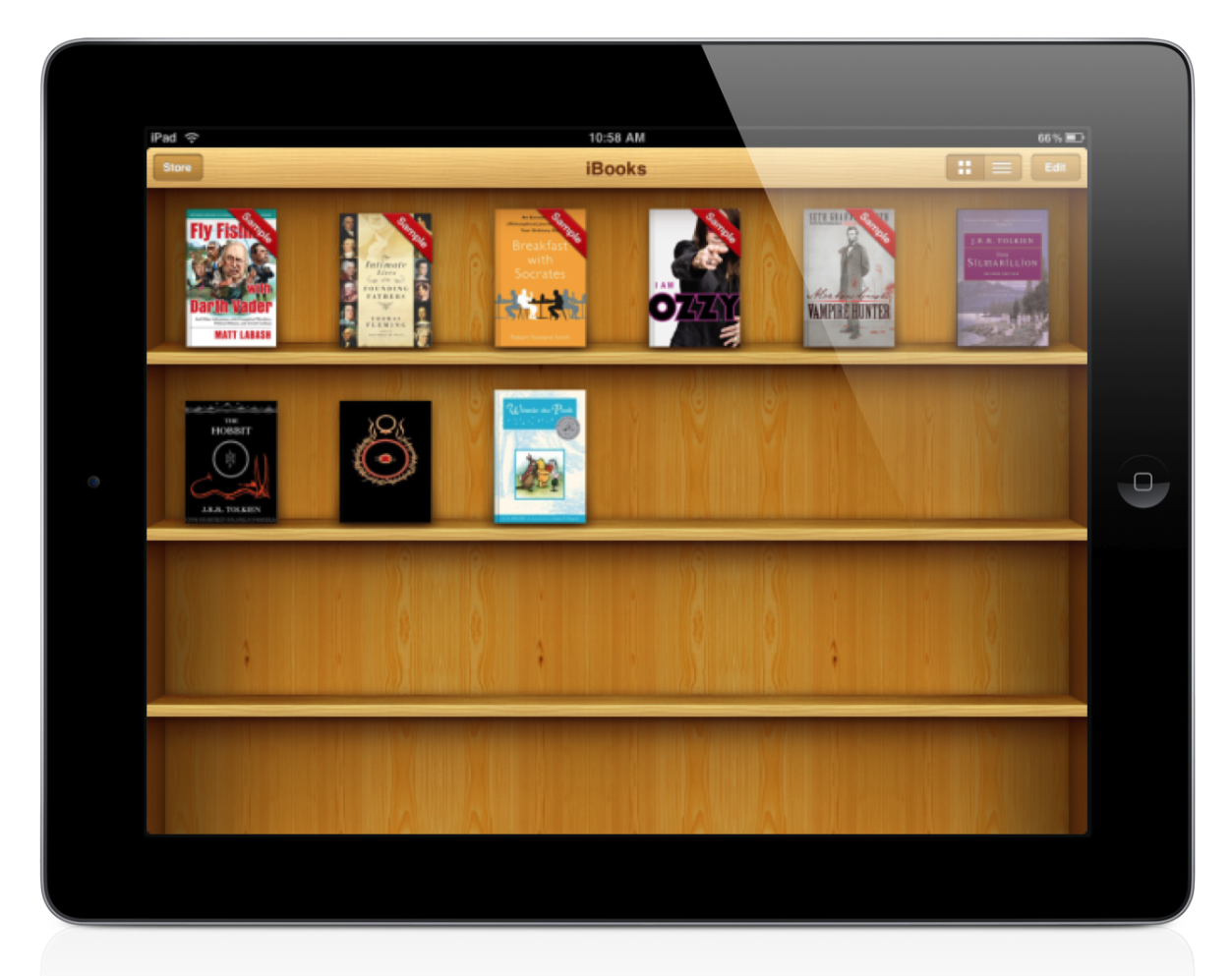
In a typical high school English classroom, about one-third of the students are genuinely excited about reading. As for the rest, the only the only power keeping them in their seats is the government. Okay, so maybe I am exaggerating, but this semester when I worked at Centennial High School in Burleson, the phrases "I hate reading" or more commonly, "I suck at reading" flowed freely throughout the classroom. This is discouraging to hear, but I believe there is something we can do. While working one-on-one with a student, I started conversing about his reading habits. Once again, the dreaded phrase "I hate reading" came up, and when I asked why, he looked stunned. It occurred to me that this belief had never been questioned. He replied with "I just do. I've never been good at it." I learned from later observation that he was diagnosed with dyslexia in elementary school, but he did not let this hold him back. He explained how at home, he loves to read on his iPad. His artistic skills are highly advanced (to the point where in the middle of a lesson he would just start drawing in three dimensions with shading and exquisite detail, just with a ball point pen mind you.) He talked about the graphics that iPad uses for books and how this makes reading exciting for him. Now I am all for print books and generally prefer them to ebooks. But when a freshman student reading at an elementary level states that reading on an iPad is exciting, in my book (no pun intended) that is a win. I need to do whatever I can to excite students about reading. Whether that's an iPad, an eReader, comic book, reading is reading. For the remainder of our lessons, I let him bring his iPad, and we read Romeo and Juliet and found links to video clips, pictures, and translations to modern English. Overall, the fact that I allowed him to use an iPad in class boosted his confidence as a reader and made his experience with the text interactive and visually stimulating.

Charles Backus of Texas A&M Press

For our publisher interview, Makenzie and I contacted Charles Backus from Texas A&M Press. The following are his responses.

1. What are the professional qualities needed for a publishing career?
  • An inquisitive and ordered mind. A sound knowledge of language and broad familiarity with good literature. Organizations and time-management abilities. At least basic computer skills; ideally, familiarity with editorial, design, and production software. Particularly for scholarly publishing, some direct experience or involvement with the process of scholarly research, conventions, and writing.
2. What has been your favorite work that you were involved in publishing? Why?
  • I can't really narrow it down to one but will mention three or four. If you asked me tomorrow or next week, the list might be rather different. A Continuing Education, the first book collection of familiar essays by Sam Pickering (a wonderful scholar, prolific writer, and humorist reputed to be the model for the Robin Williams character in the movie "Dead Poets' Society"). Published by University Press of New England in 1985, this was one of my first acquisitions a year or so after I began work there, and I have been privileged to maintain contact with Pickering ever since
  • The 2000-Yard Stare: Tom Lea's World War II, compiled by Brendan Greeley, published by Texas A&M University Press in 2008.  This book is filled with extraordinary art and eyewitness writings by celebrated Texas artist Tom Lea from his WWII assignments for Life magazine, which took him first to the North Atlantic; then through England, Southern Europe, the Middle East, and India, to China and back; then to some of the greatest naval battles in the South Pacific; and finally to one of the fiercest of the Marine Corps' island invasions toward the end of the war.  
  • Creating Picturesque America: Monument to the Natural and Cultural Landscape, by Sue Rainey, a compelling, illustrated study of how depictions of the American landscape in art and words became central to a renewed focus on the grandeur and riches of the American continent in the years following the Civil War.  The book was published, following numerous revisions, by Vanderbilt University Press in 1994, ten years after I first established a working editorial relationship with the author, who followed me from one press to another. (Note also my response to your question #7.)  It subsequently won the Charles C. Eldridge book prize in the field of American art from the Smithsonian, in 1997.
  • A Writer's Reality, by 2010 Nobel Prize winner Mario Vargas Llosa, published in 1992 and based on his lectures at Syracuse University while I was director of its press.  I got to know and work with him then and was later able to arrange a campus visit and standing-room-only lecture by him at Vanderbilt when I was director of its press, where we also published two critical studies of his work as a novelist. 
3. What genres do you typically publish? Who is your main consumer market? 
  • We publish both scholarly and general interest non-fiction, In both print and digital (ebook) formats.  We also distribute some fiction and poetry for client publishers in our distribution consortium.  We sell to all elements of the book trade, including chain stores, independent book stores, wholesalers, online and ebook vendors, libraries, institutions, book clubs (and other subsidiary rights), college course use, and individuals.
4. What has been the most valuable lesson you have learned in publishing?
  • Without effective publication, the products of research, discovery, and creativity are impeded or lost altogether.  
5. How has your publishing been affected by the movement into a digitally focused society?
  • Although our overall goals and mission as the principal publishing arm of a major research university remains basically unchanged, the technologies, processes, and formats through which we acquire, edit, design, manufacture, promote, advertise, sell, and distribute books have all evolved rapidly in the past decade, as have reader and market expectations. Like our peer university presses around the country, we have invested considerable amounts of prioritized effort, time, and money in keeping on the proactive side of these developments.
6. Where do you see publishing in the future because of this shift into a digital age?
  • Obviously, publishing in digitized, electronic form is here to stay, for university presses and all other publishers, but that does not necessarily mean the end of print on paper.  For at least the next few or several years (perhaps decades?), readers will want both print and digital products, and publishers including university presses will be able to deliver both.  Print-on-demand will be an important part of that mix.  But so will increasingly sophisticated and useful enhancements of digital books (perhaps especially scholarly ones) that include greater and richer data, audio and visual representations, including both 3-D and 360º images, and who knows what else in the future. 
7. How many revisions does a work typically go through? How long does the process last?
  • There is no one answer to this question.  It is very rare that a university press book is published exactly as first submitted by the author, with no more than minimal copy editing.  Most are revised and reorganized, often heavily, based not only on critiques from the press's acquisitions and manuscript editors but also from formal evaluations and content suggestions from peer reviewers. The evaluation process typically takes from three to six months to accomplish.  Once approved for publication, further revisions and editing usually requires at least two or three months but can take much longer. 
Thank you Charles Backus for the insight into the publishing business. I found it interesting that they publish ebooks as well as print books. Typically when I think of a press, I think of printed books, not electronic. That being said, I think this is a great way to stay current and offer options to reach a wider audience. Also, I loved hearing about his connection to Sam Pickering who inspired the Dead Poet's Society. This is one of my favorite movies. What an incredible experience so early in his career. Overall, this interview provided great information as to what skills and commitments are necessary for a career in publishing.